
A collaborative research team from the Institute of Medicinal Plant Development, Chinese Academy of Medical Sciences and the Peking Union Medical College, Haikou 570311, China(1), used an SFT-110 SFE to isolate essential oil extracted from Curcuma wenyujin rhizomes. (Note: The SFT-110 has been superseded by the SFT-120). In addition to optimizing the extraction parameters, they were interested in developing a rapid and sensitive gas chromatography–mass spectrometry (GC–MS) method for quantitative and qualitative analysis of essential oil extract. Six main biologically active compounds (eucalyptol, β-elemene, curzerene, germacrone, curdione, and curcumol) were collected and analyzed.
Curcuma wenyujin Y. H. Chen et C. Ling is a perennial plant belonging to the family Zingiberaceae and is mainly cultivated in the Chinese provinces of Zhejiang, Guangdong, Guangxi, Jiangxi, Fujian, and Hainan. The rhizomes of C. wenyujin are used as a traditional Chinese medicine for the treatment of jaundice, thoracic‑abdominal pain, arthralgia, hematuria, dysmenorrhea, epilepsy, and psychataxia.[2-4]
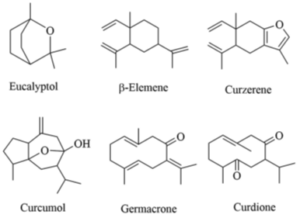
The six target components demonstrated good linearity (R2 > 0.9979) over a relatively wide concentration range. The interday and intraday variations had relative standard deviation values of less than 5% and the average recovery ranged from 96.95% to 100.04%. The limit of quantitation ranged from 0.032 to 0.235 μg/mL. The method they developed was successfully used to analyze the six compounds in 17 samples collected from different origins. Significant variation was observed for the concentrations of the six compounds. In addition, 51 constituents were identified in C. wenyujin rhizome essential oil, consisting of 87.66% of the total essential oil, including curdione, curzerene, dehydrocurdione, germacrone, 1,4-bis(2-benzimidazoyl)benzene, neocurdione, curcumenone, and β-elemene.
The optimized sc-CO2 extraction conditions offering the highest yield of essential oil was found under conditions of pressure 25 MPa, temperature 50°C, time 120 min, and 15 L/hr. flow rate of CO2 measured in the gas phase. (425mls CO2 gas = 1ml of CO2 liquid).
The proposed method will be useful in the quality control of C. wenyujin rhizome essential oil production. Further the optimized extraction conditions could easily be applied and scaled to a larger production of these biologically active essential oils using sc-CO2 extraction methodology.
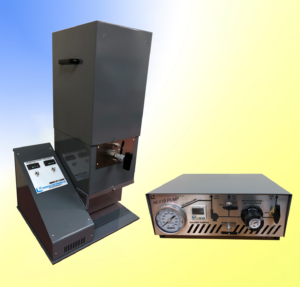
The SFT-120 SFE is a moderately priced laboratory SFE, covering the full range of temperatures and pressures that are required by the majority of supercritical extraction applications. To learn more about this versatile SC-CO2 extractor, please contact us.
References:
1. Gas Chromatography–Mass Spectrometry for Quantitative and Qualitative Analysis of Essential Oil from Curcuma wenyujin Rhizomes Xiang‑Sheng Zhaoa, Yue‑Xiang Zengb, Ya‑Kui Zhoua, Rong‑Tao Lia, Mei‑Hua Yanga Key Laboratory of Resources Conservation and Development of Southern Medicine of Hainan Province & Hainan Branch of the Institute of Medicinal Plant Development, Chinese Academy of Medical Sciences and Peking Union Medical College, Haikou 570311, China, bSchool of Life and Pharmaceutical Sciences, Hainan University, Haikou 570228, China, Institute of Medicinal Plant Development, Chinese Academy of Medical Sciences and Peking Union Medical College, Beijing 100193, China. World J Tradit Chin Med | Volume 7, Issue 1, January-March 2021
2. Chinese Pharmacopoeia Commission. Pharmacopoeia of People’s Republic of China (Part Ⅰ). Beijing, China: China Medical Science Press; 2015.
3. Liu ZL, Zhao NN, Liu CM, Zhou L, Du SS. Identification of insecticidal constituents of the essential oil of Curcuma wenyujin rhizomes active against Liposcelis bostrychophila Badonnel. Molecules 2012;17:12049‑60.
4. Fang F, Cheng ZH, Guo YL, Cai YB. Comparative analysis of the volatile components in the fresh roots and rhizomes of Curcuma wenyujin by static headspace gas chromatography mass spectrometry. Chin J Chem 2006;24:1346‑51.